







Circle CEO Jeremy Allaire on Arc, the Future of Quantum and the Agentic Economy
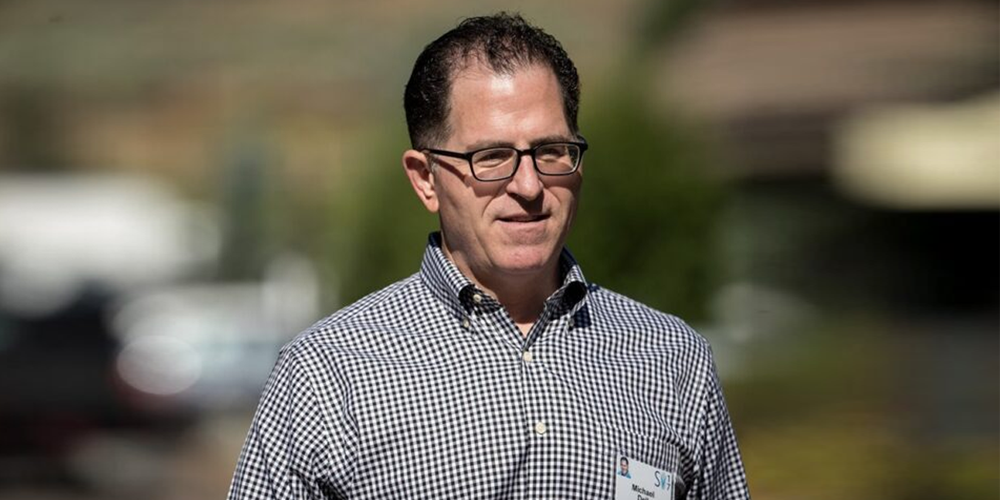
Circle is known to many as the issuer of the $74 billion digital currency USD Coin, or USDC. But co-founder and CEO Jeremy Allaire believes the company’s latest launch may be the “most consequential major platform launch” in its history.
“Arc is built from the ground up for what the financial system needs: fees paid in dollars, settlement that is final in under a second, confidentiality with compliance built in, and operators that boards and regulators can trust,” Allaire wrote in a recent email.
Allaire likens the Arc blockchain and full-stack platform, launched on Sept. 16, to an Android operating system for the global economy, facilitating payments, lending, trading, and even, one day, commerce between AI agents. “Humans tolerated money that sleeps on weekends; machines will not,” he says.
The platform has more than 100 institutional and ecosystem builders including global banks, asset management firms, payment networks, exchanges, and AI platforms. Its founding validators include BlackRock, Standard Chartered, Mastercard, Visa and Intercontinental Exchange.
Allaire, who co-founded Circle 13 years ago, is a serial entrepreneur. Before his work on stablecoins, he founded cloud-based online video platform Brightcove, and before that, software company Allaire Corporation with his brother, which was acquired by Macromedia in the early aughts. He spoke with TIME in June, ahead of the launch of Arc.
How are you thinking about the different regulatory environments in all the markets that you’re operating in?
Blockchain networks are just technology services. They’re soft, open software protocols that run on the internet. They’re general purpose computers, and so general purpose computers and network protocols are themselves not regulated activities. It’s what people do on top of it. It’s a little bit like the internet itself. The internet is unregulated, but the activities on the internet become regulated, whether it’s privacy, data, or financial activity.
But one of the biggest challenges of actually [having] what we think of as the core of the financial system run on public internet infrastructure like this, has been that the major regulators have had concerns about [whether] this infrastructure [is] too decentralized, where it’s a bunch of unknown actors and therefore, even though it’s meant to be trustless, it’s sort of not trustworthy, or you could have the commingling of bad actors and good actors. The other is slightly more technical, but important, which is: central banks, for example, care about that. When a transaction happens, it’s a final transaction, and the way a lot of these networks have worked in the past is there’s what’s called probabilistic finality. And so if you’re building a system where I bought or sold a stock or I made a transfer of value from one point to another point, you need to know that it actually happened. That has to be final. So regulators have a framework for that that is applied to the infrastructure that runs the existing financial system, and what we’ve done with Arc is we’ve designed Arc specifically to meet those standards, so that from a central bank perspective, or from the [perspectives of the] regulators that oversee, for example, the guts of the stock market, essentially think of it as the service guarantees that are required in the traditional financial system.
What does this mean for the future of trading desks, and how will that look in the future? Presumably, fewer people, more agents?
There’s several things all happening. One is getting this general purpose economic infrastructure out there, where machine software can deploy and run and intermediate value all programmatically. The second is taking existing financial contracts, and digitizing those onto these networks—tokenization. An equity is a contract. It conveys governance. It conveys a waterfall of economic participation. Taking the financial contract itself and the instrument itself, and digitizing those fully, that whole process of tokenization is going to take years, but it’s already begun. Once that happens, then all of these become themselves programmable. Just like we have with things like USDC, we now have programmable money, and that’s really powerful. The second piece is basically the development of agentic infrastructure. There’s the development of the agentic infrastructure from an AI platform perspective, and then there’s this convergence of agentic infrastructure and economic infrastructure. I call it the agentic economy, and this convergence of those will, I believe, completely reconstitute the way every firm in the world operates.
You have said that you consider Circle to be in the very early stages of what it could be, even though you are already a very big business. Where do you see the future of Circle going?
When I founded the company, I was thinking about it over a multi-decade timeframe, and we’re broadly a decade into this, and the first thing that we wanted to achieve was this idea of programmable money, open protocols for dollar digital currency on the internet, and getting that into a place where it could scale. It took around 10 years or so to get there. We’re now there, but the adoption of that is still at the very start. So there’s $360 billion of stablecoin money in circulation. There’s a lot of transaction volume, but if you look at the total supply of electronic money in the world, roughly $120 trillion of electronic money in the world, there’s an enormous amount of growth to happen, and I believe that this kind of money is a superior form of money and will eat into the electronic money base over time. It’s at the front end of penetrating all these different areas of markets and commerce and the financial system.
Must Reads from The Times
No must-read articles found.